Post: Assignment #2: Working with a Corpus
Assignment #2: Analysis on Taylor Swift Song Lyrics
I chose to analyze Taylor Swift’s song lyrics. I divided her works into three eras, 2006 to 2010, 2011 to 2018 and 2019 to 2023. Each era includes three to four albums, and they all have different attributes.
-2006 to 2010
- This era covers Taylor Swift’s early career, characterized by country-pop and country-rock influences.
- Focus on themes such as young love, heartbreak, and coming-of-age experiences.
- Key albums include “Taylor Swift” (2006), “Fearless” (2008), and “Speak Now” (2010).
Most frequently used phrases are “i’m” and “you’re”, which also appear a lot in the next two eras. These phrases unfold that Taylor tells the stories through first person perspective and is very good at portraying her relationship with others. However, ‘you’re’ doesn’t solely refer to others but can also encompass Taylor herself. For instance, in songs like ‘Fifteen,’ she adopts the perspective of both her younger self and her audience, crafting lyrics that read like a heartfelt letter
The frequent use of words like ‘like’, ‘love’ and ‘baby’ suggests a predominant theme of romantic relationships in her songs during this era. According to the trends chart, ‘like’ and ‘love’ almost appear all the time.
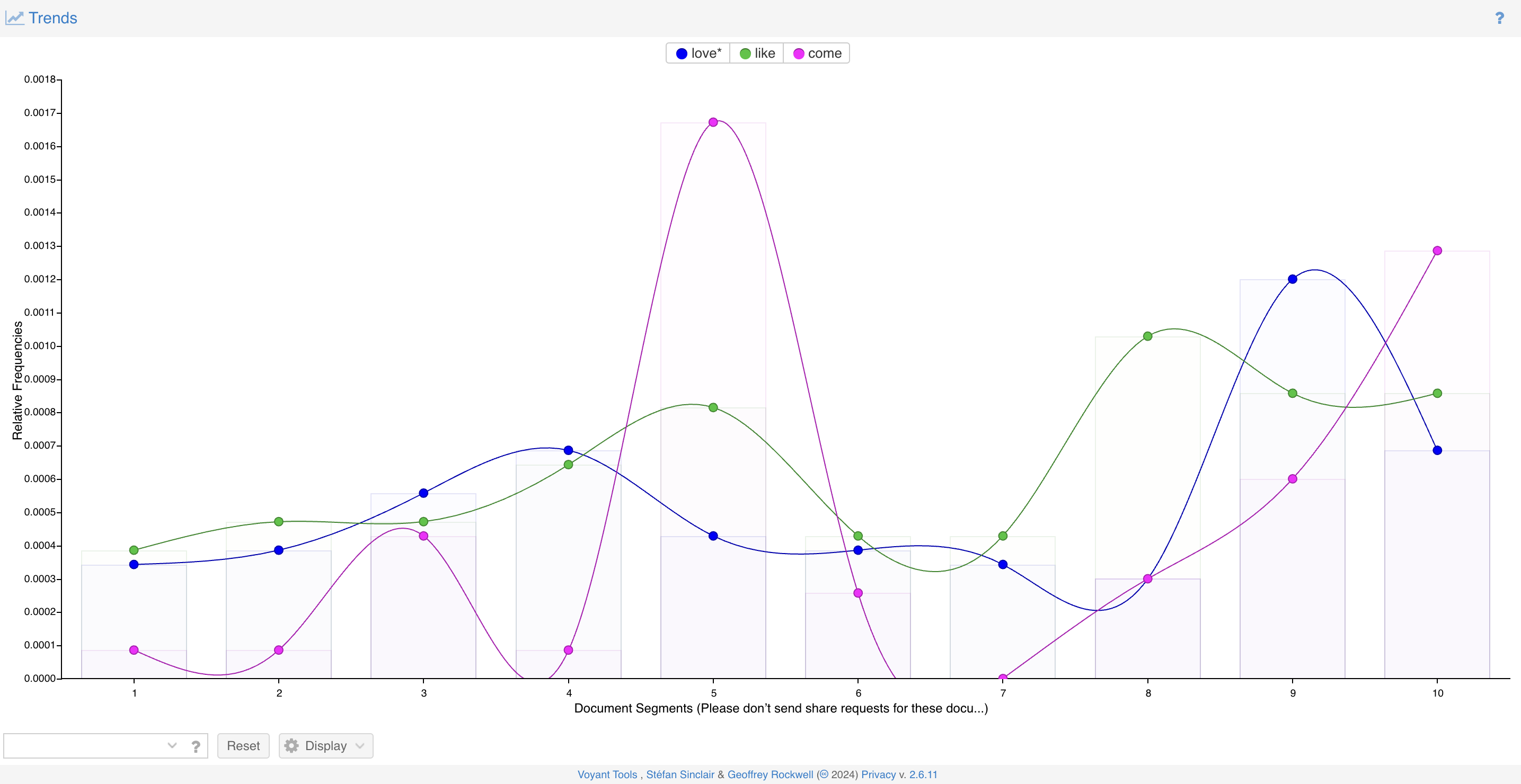
Additionally, the frequently used word “come” may imply themes of anticipation, invitation, or the desire for closeness, further reflecting the romantic narrative prevalent in her music during those years. The links tool indicates that ‘come’ is frequently paired with ‘on’ and ‘back’. The combination of “come on” could convey encouragement, urging someone to join or participate, while “come back” might evoke sentiments of nostalgia, longing, or the hope for a return to a previous state or relationship.
-2011 to 2018
- This period marks Taylor Swift’s transition to mainstream pop music, incorporating elements of synth-pop and electronic dance music (EDM).
- Themes may include empowerment, self-discovery, and personal growth.
- Key albums include “Red” (2012), “1989” (2014), and “Reputation” (2017).
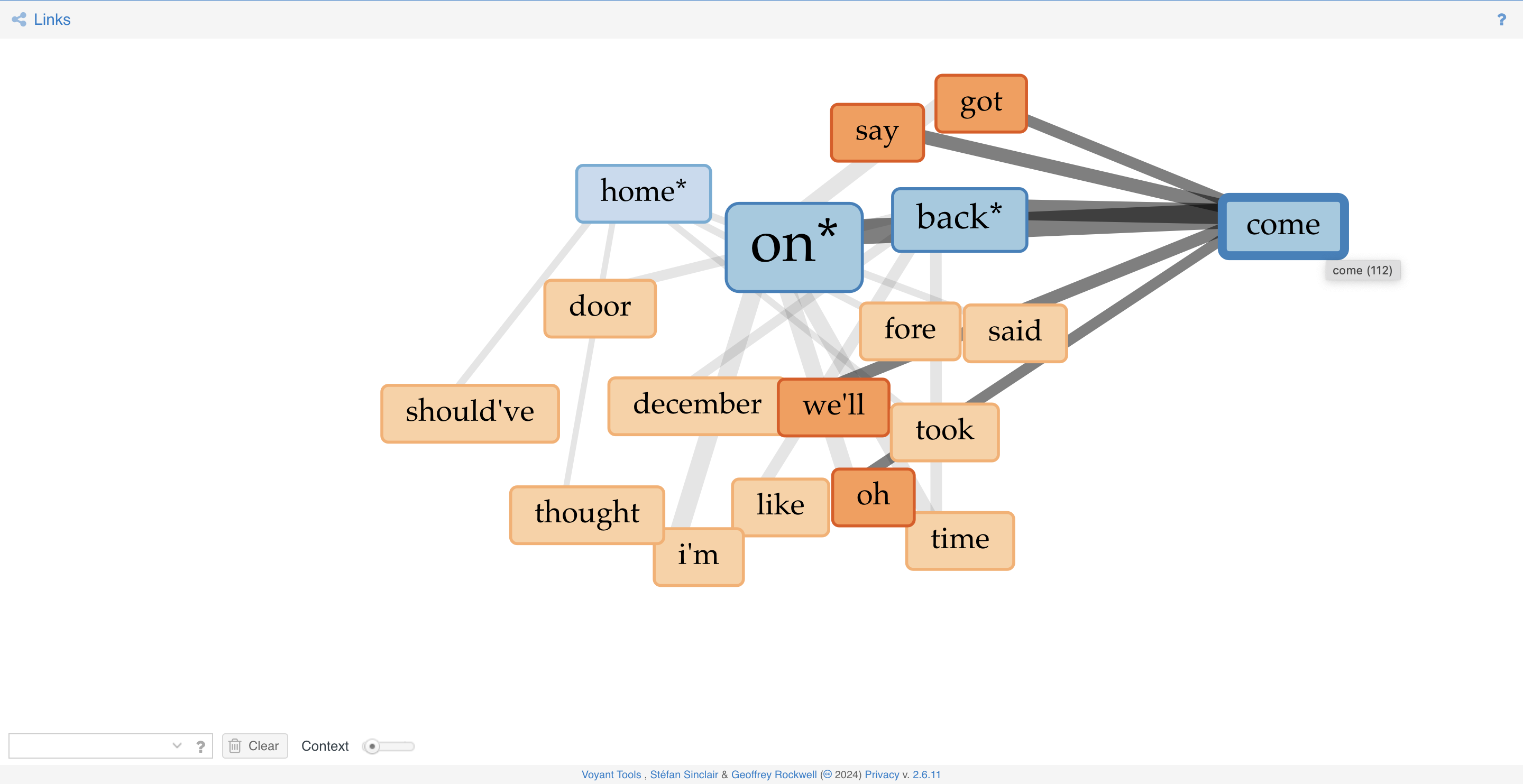
Obviously, ‘i’m’ is more frequently used than ‘you’re’ in this era. In “Red,” Taylor explores themes of love, heartbreak, and self-discovery, with tracks like “All Too Well” and “I Almost Do” showcasing her emotional vulnerability. Similarly, “1989” looks into her experiences with love and relationships, with songs like “Style” and “Wildest Dreams” reflecting her own perspectives and feelings. “Reputation” sees her confronting public scrutiny and personal challenges, with tracks like “Look What You Made Me Do” and “Delicate” expressing her emotions and experiences in a more assertive and introspective manner. Therefore, the increased frequency of the phrase “i’m” compared to “you’re” during this period may indeed suggest a focus on her own feelings and experiences in her music.
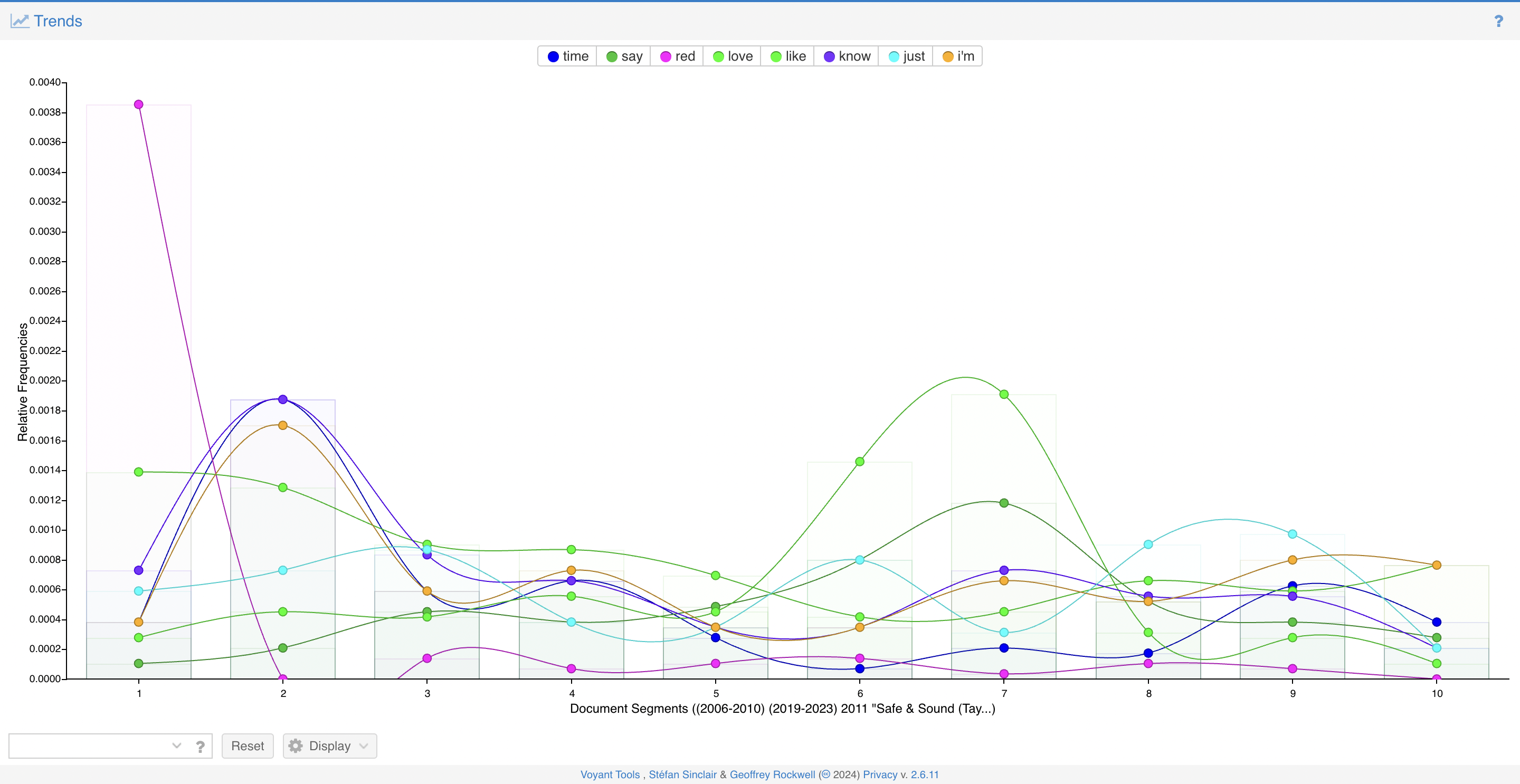
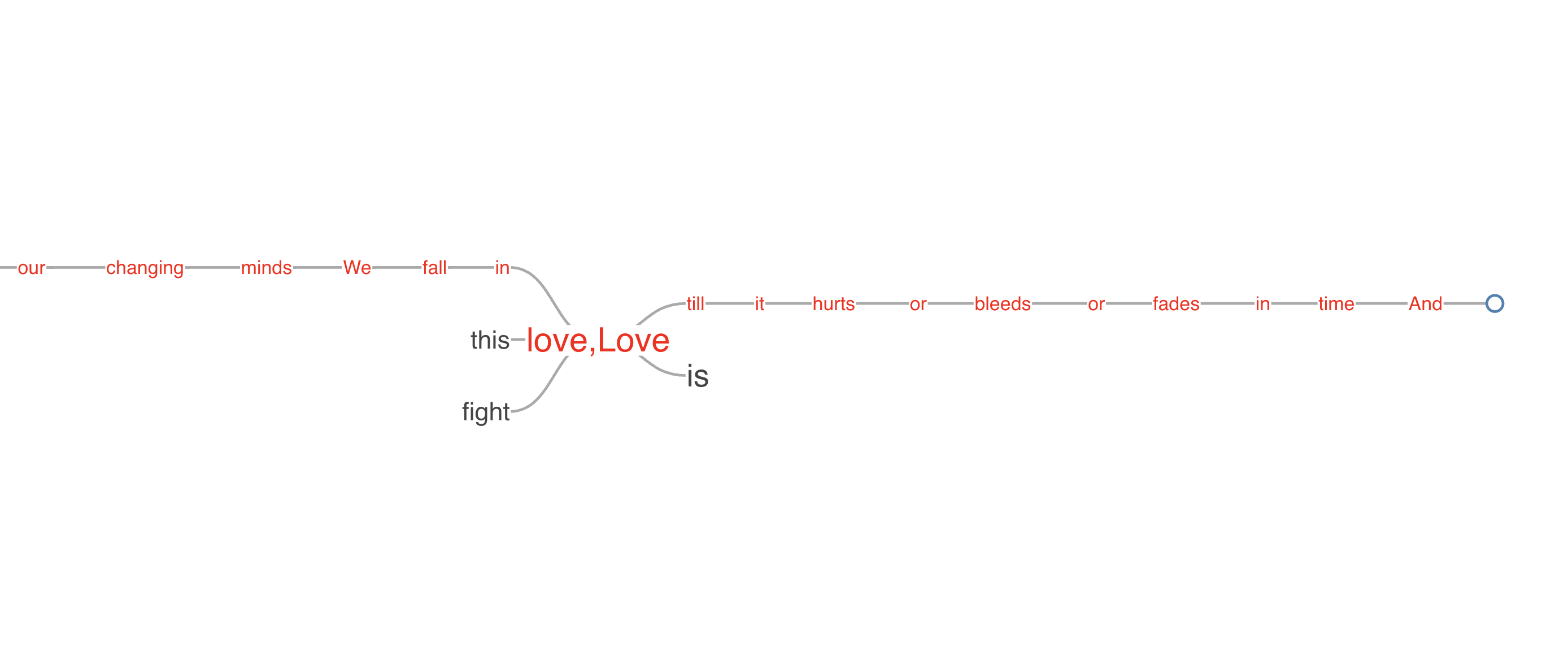
‘Like’ and ‘love’ are still very consistently used words in this era. It’s noticeable that the wordtree indicates the words frequently paired with ‘love’ are ‘hurts’, ‘bleeds’ and ‘fades’. It suggests a nuanced exploration of the complexities of love in Taylor Swift’s song lyrics. These words evoke themes of pain, vulnerability, and the transient nature of relationships. It reflects a deeper narrative where love is portrayed not only as a source of joy but also as something that can cause anguish and uncertainty. This use of language adds layers of depth to her storytelling, capturing the emotional rollercoaster often associated with love and relationships.
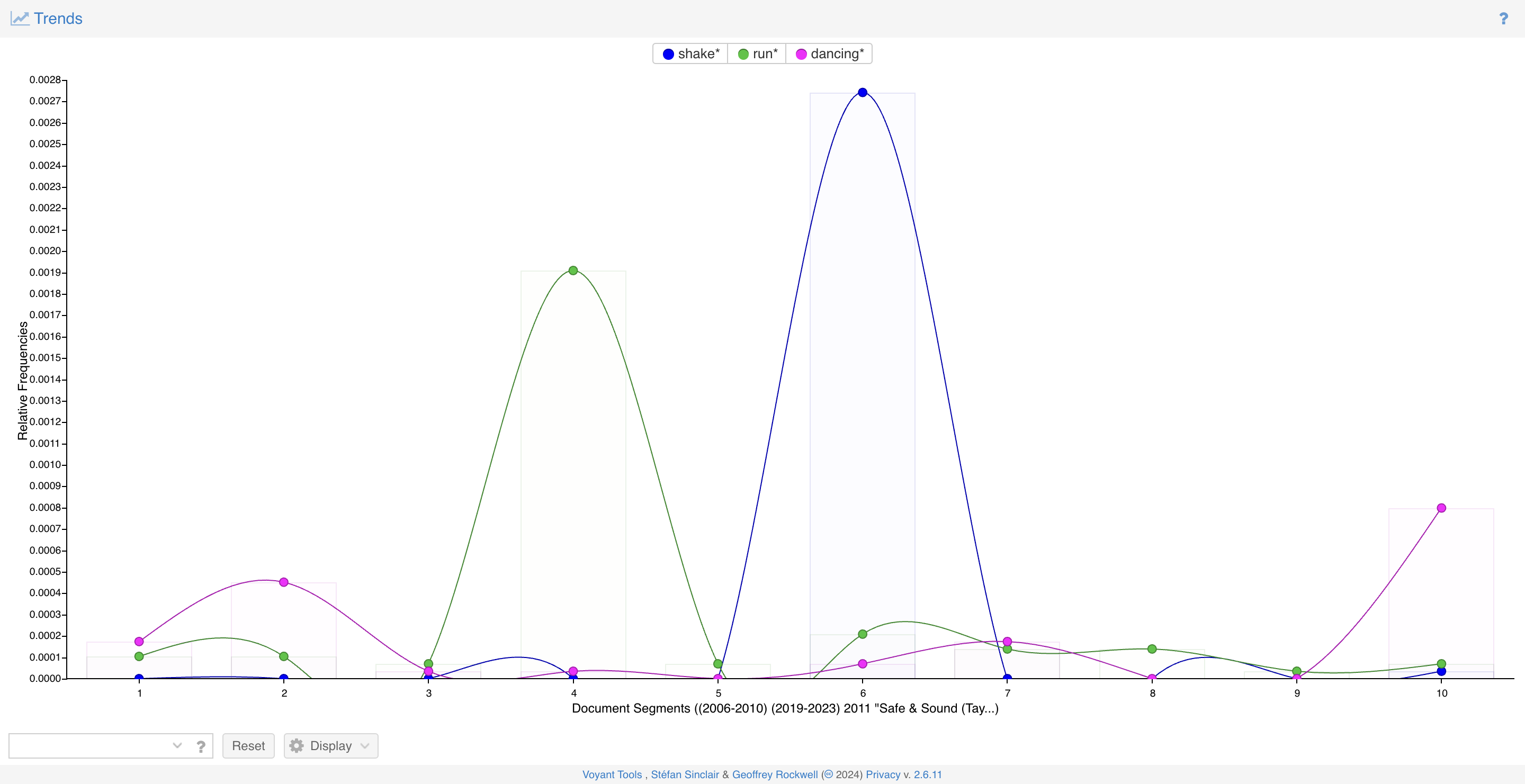
Different from her earlier era, where words like ‘come’ and ‘love’ dominated, the period spanning albums “1989” and “reputation” witnesses a thematic shift in Taylor Swift’s lyrical content. In this phase, phrases such as ‘shake’, ‘dancing’, and ‘run’ are notably recurrent, indicating a deliberate departure from her previous themes. This change suggests Taylor’s response to the rumors and scrutiny surrounding her, with a focus on themes of liberation, defiance, and self-empowerment. The repeated use of words associated with movement and freedom reflects her determination to break free from constraints and assert her independence amidst adversity.
-2019 to 2023
- This era reflects Taylor Swift’s experimentation with diverse musical styles and more mature lyrical content.
- Themes may include introspection, social commentary, and embracing authenticity.
- Key albums include “Lover” (2019), “Folklore” (2020), “Evermore” (2020), and “Midnights”(2022).
The increased frequency of “I’m” compared to “You’re” suggests a shift in focus towards Taylor Swift’s personal experiences and perspective during the 2019 to 2023 era. This emphasis on the first-person narrative indicates a deeper exploration of self-expression and introspection in her songwriting. Additionally, the significant occurrence of “I’d” further reinforces this introspective theme, as it implies contemplation and reflection on past events or hypothetical scenarios. Overall, these trends suggest a more introspective and self-aware approach to storytelling in Taylor Swift’s music during this era, characterized by a heightened sense of personal reflection and vulnerability.
The consistent appearance of “night” throughout the lyrics in all three eras, often paired with “middle” and “dream,” hints at a persistent motif of introspection and the passage of time. The combination of “night” with “middle” suggests moments of transition or ambiguity, while its connection with “dream” implies contemplative or imaginative states. This repetition underscores the symbolic importance of “night” in Swift’s songwriting, contributing to themes of self-reflection, aspiration, and the temporal journey depicted in her music.
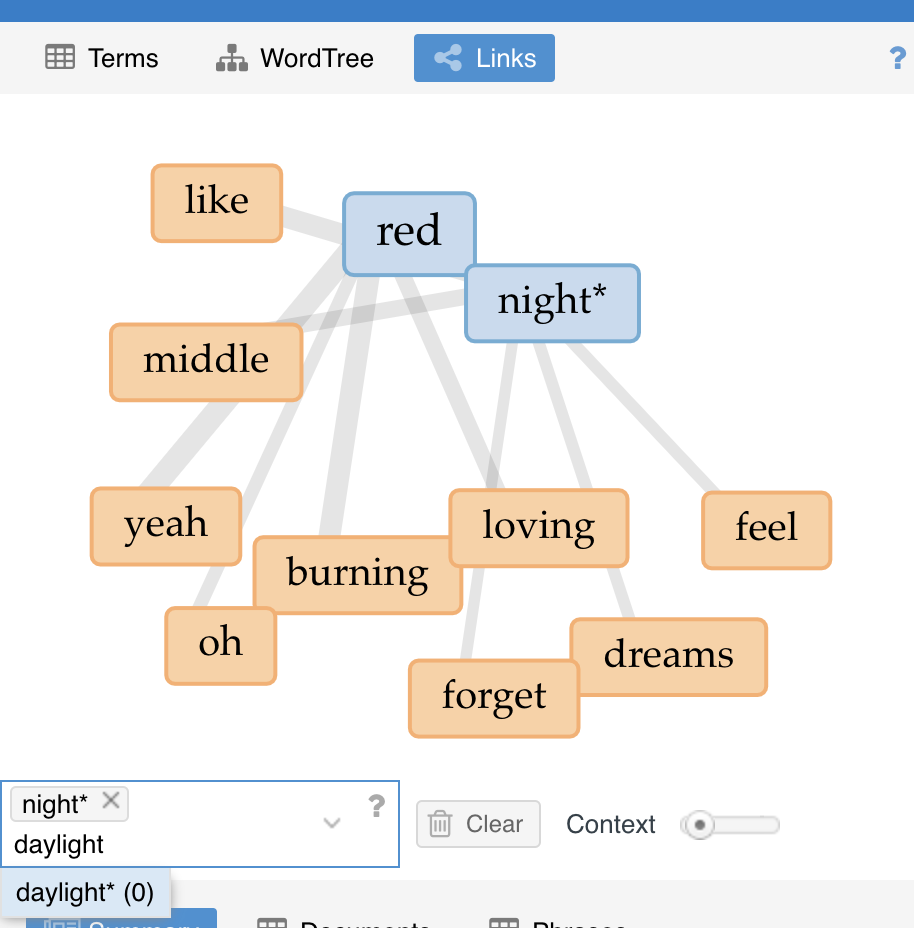
The presence of both “daylight” and “night” in the lyrics of Taylor’s songs during the 2019 to 2023 era suggests a thematic shift towards a more nuanced exploration of time and emotional states. Unlike the absence of “daylight” in the earlier eras, its inclusion alongside “night” implies a broader spectrum of experiences and emotions being depicted in her music during this period. This contrast between light and dark imagery could symbolize a deeper introspection into the complexities of life, with “daylight” representing hope, clarity, and optimism, while “night” conveys darkness, uncertainty, and introspection. Overall, the presence of both “daylight” and “night” in the lyrics of this era suggests a more multifaceted and mature exploration of emotions and experiences in her songwriting.
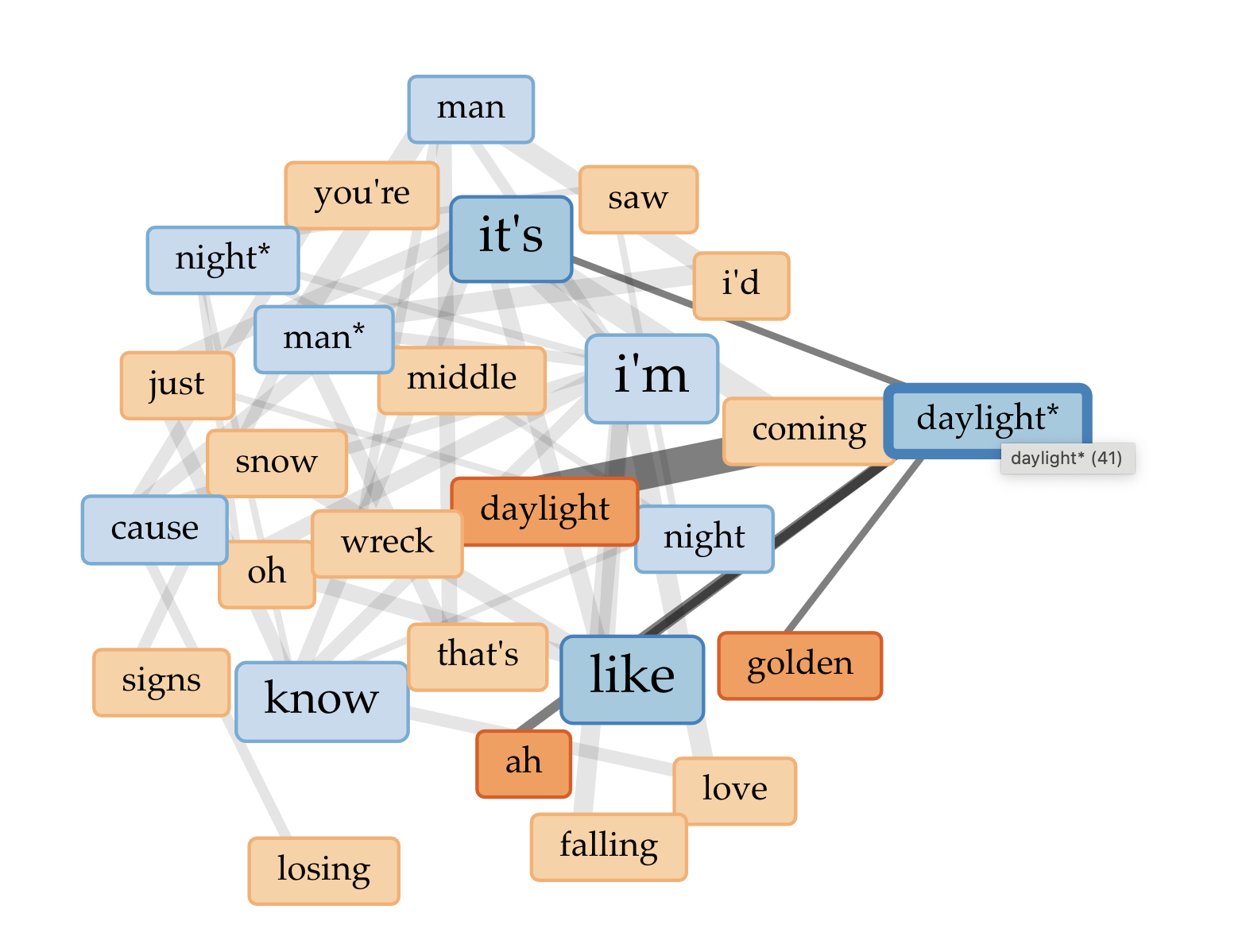
The inclusion of “golden” alongside “daylight” suggests a sense of warmth, happiness, and positivity associated with moments of clarity and optimism. This pairing evokes imagery of bright, sunlit days filled with joy and contentment, contrasting with the darkness and uncertainty often associated with “night.” Together, “daylight” and “golden” create a vivid picture of moments of happiness and fulfillment, further enhancing the multifaceted exploration of emotions and experiences in Taylor Swift’s songwriting during this period.
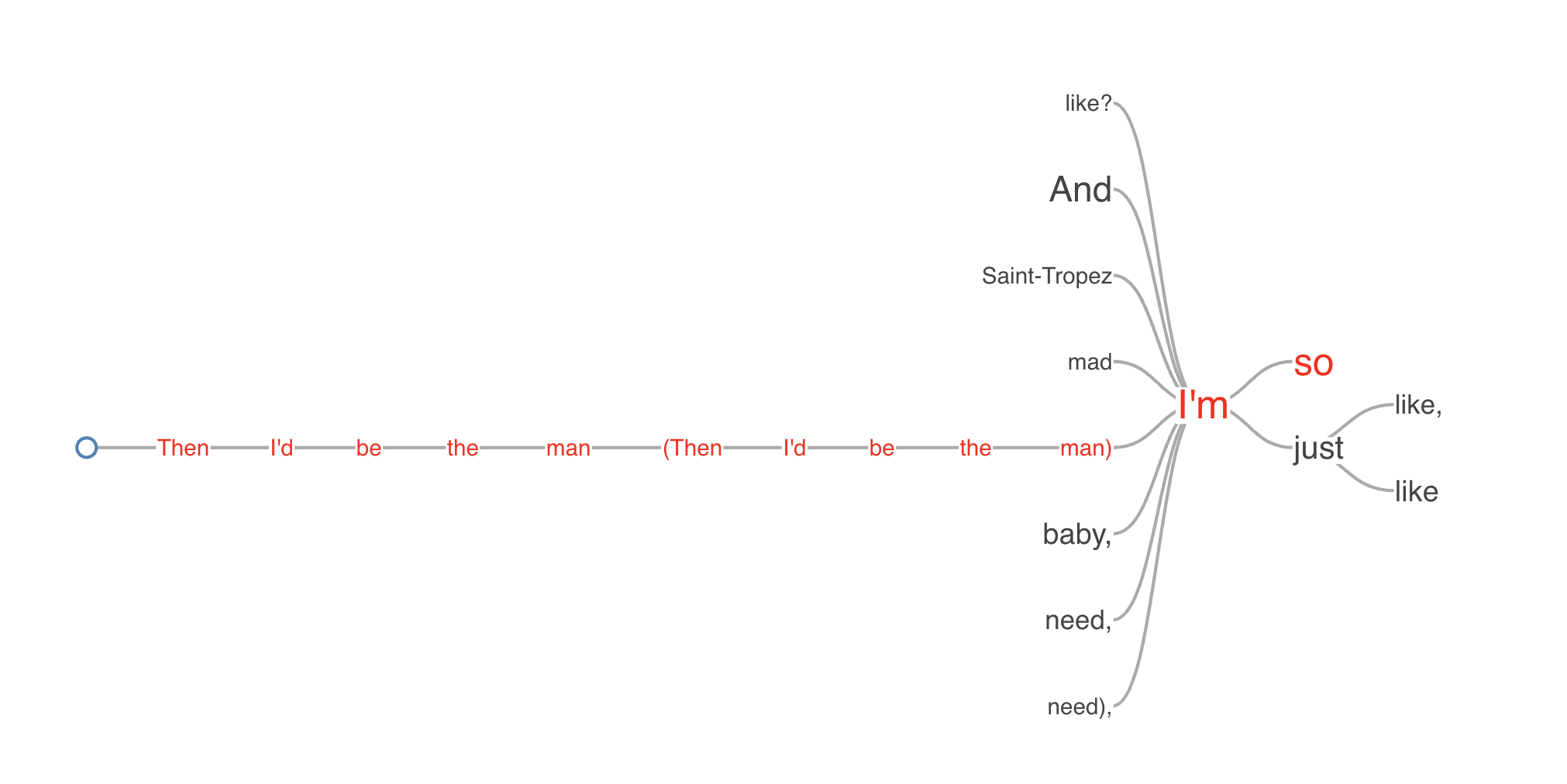
Throughout Taylor Swift’s career, her lyrics reflect a profound evolution and maturation. In the early years, frequent mentions of “you’re,” “love,” and “like” paint a picture of a young girl navigating the complexities of love and heartbreak. As she transitions into the second era, characterized by hits like “Shake It Off,” Swift begins to assert herself, shaking off rumors and embracing her individuality. This phase sees her exploring themes beyond romance, delving into self-discovery and empowerment. By the third era, Swift emerges as a seasoned storyteller, her lyrics demonstrating a newfound maturity and depth. Addressing themes of friendship and feminism, she showcases a more nuanced understanding of the world and her place within it, marking a significant evolution in her artistry.
Conclusion
Before I began the analysis, I had a basic understanding of the context of Taylor Swift’s albums and her personal evolution. Computer-assisted analysis allows for the identification of patterns, trends, and correlations within a large corpus of text that may not be immediately apparent through a linear read. It clearly visualizes the changes through different times. But when I use the DreamScape tool, it doesn’t always accurately show the place, and I don’t know how to change that information, otherwise it would be fun to analyze the location mentioned in Taylor’s song. The format of the corpus, provided in textual form, was suitable for the purposes of computer-assisted analysis. However, some shortcomings of the texts include variations in lyric transcriptions, potential inaccuracies in the representation of song lyrics.
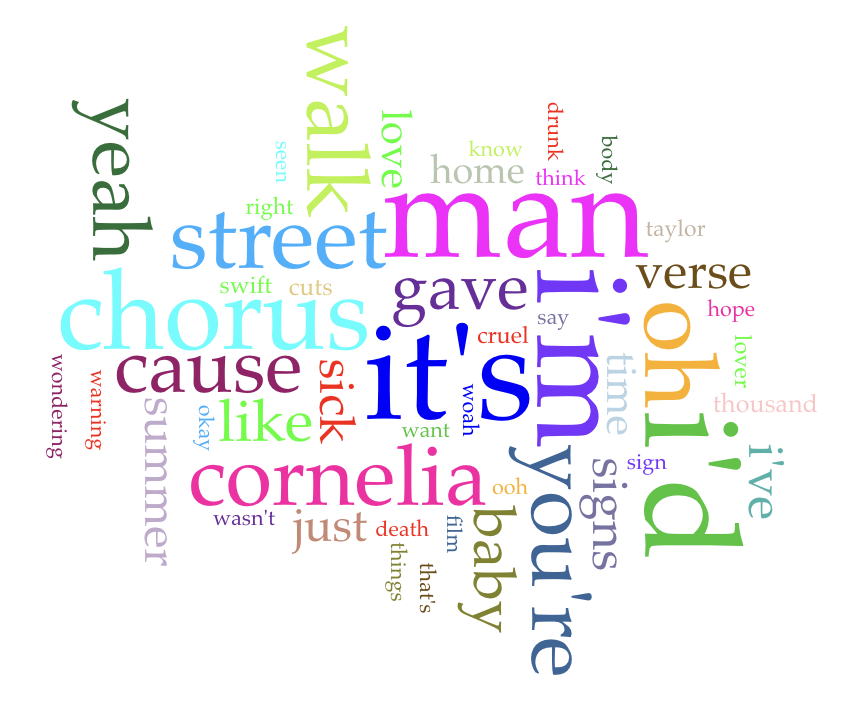
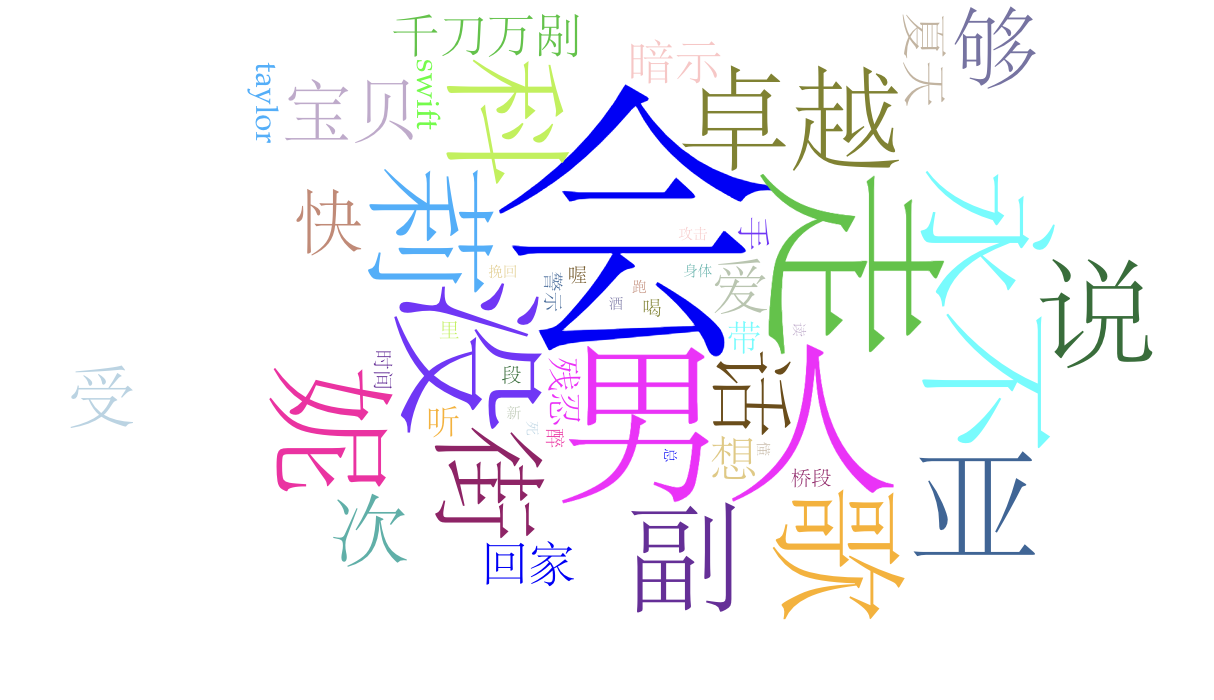
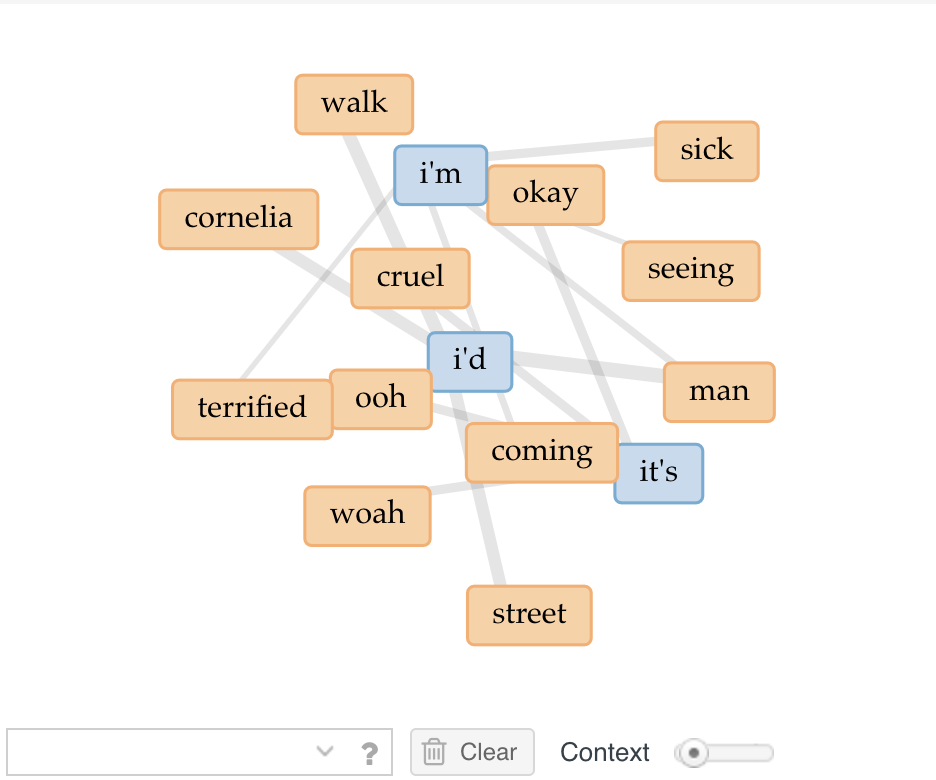
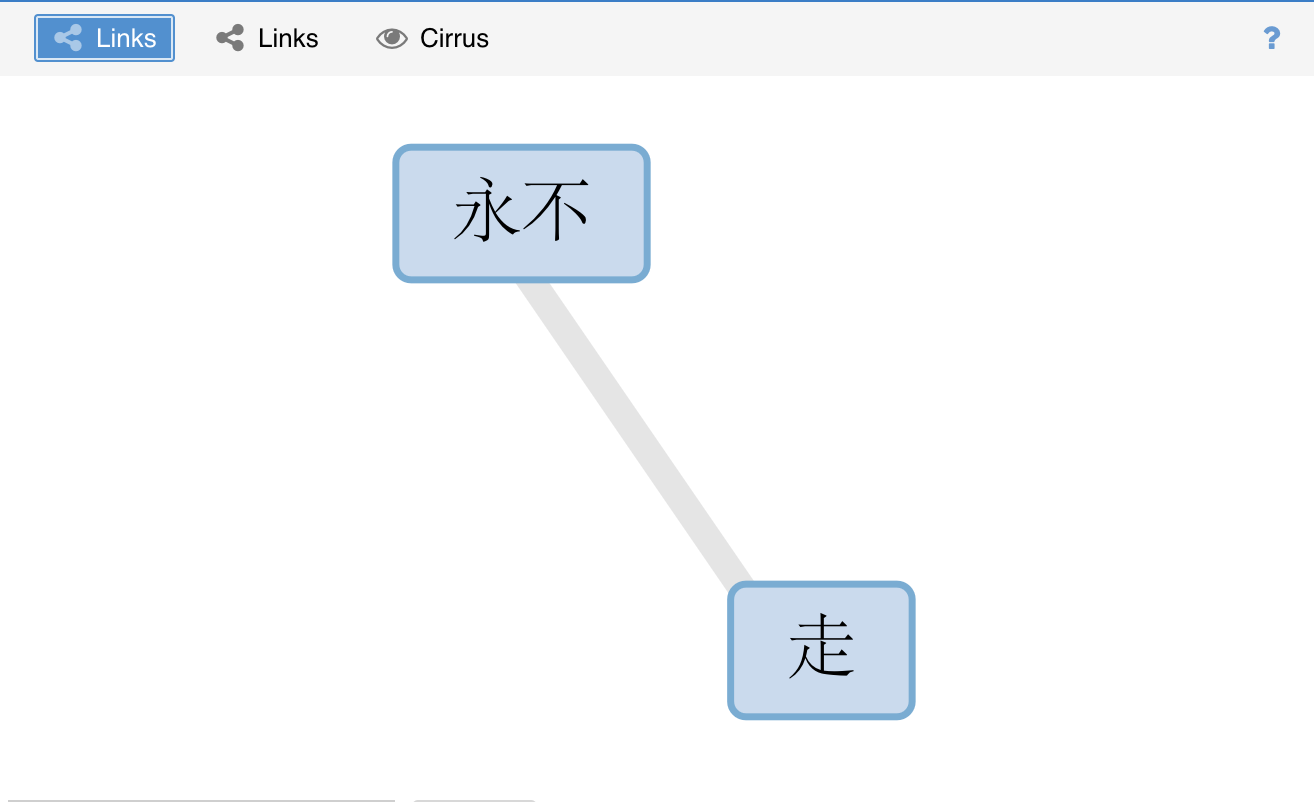
To evaluate the efficacy of Voyant tools with Chinese text, I selected songs from Taylor Swift’s third era and inputted both the English and corresponding Chinese lyrics into the tool. While the word cloud displayed minimal variation between the languages, discrepancies arose in translations, notably with some English phrases fragmented into individual Chinese characters. For instance, “Cornelia Street” was divided phonetically into five distinct characters, resulting in their isolated appearance in the Chinese word cloud. However, the links tool yielded striking disparities, the English analysis revealed numerous correlated word pairs, while the Chinese counterpart generated only a single pair. I speculate it’s because Voyant tools understands and works better with English words.
Reference:
Swift, Taylor. Taylor Swift, Apollo A-1 LLC, 2006.
Swift, Taylor. Fearless (Taylor’s Version), Taylor Swift, 2021.
Swift, Taylor. Speak Now (Taylor’s Version), Taylor Swift, 2023.
Swift, Taylor. Red (Taylor’s Version), Taylor Swift, 2021.
Swift, Taylor. 1989 (Taylor’s Version), Taylor Swift, 2023.
Swift, Taylor. reputation, Apollo A-1 LLC, 2017.
Swift, Taylor. Lover, Taylor Swift, 2019.
Swift, Taylor. folklore, Taylor Swift, 2020.
Swift, Taylor. evermore, Taylor Swift, 2020.
Swift, Taylor. Midnights, Taylor Swift, 2022.
Ready for grading.